Pedal Drive vs. Paddle Kayak: Which Should You Buy
Caney Fork Outdoors
A pedal drive kayak turns your legs into the engine so your hands stay free to fish. A paddle kayak keeps things light, simple, and cheap, at the cost of that hands-free time. Neither one is the better boat. They're built for different days on the water, and the right answer depends on where you fish and how much boat you want to deal with.
What a pedal drive actually gives you
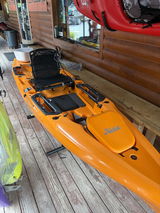
The pitch is simple: pedal with your legs, fish with your hands. A prop or fin drive under the hull turns your pedaling into forward motion, so you can troll a bait, hold position against wind or current, and fight a fish without setting down a rod to pick up a paddle. Systems like Hobie's MirageDrive, Jackson's Flex Drive, the Propel drive on Native and Bonafide boats, and Old Town's PDL all work on this same trade: legs for propulsion, hands stay on the rod.
Some drives fold up or kick back if you hit something shallow, and a few higher-end systems add reverse without you having to lift the whole unit out of the water. That matters the first time you have to back off a stump in current.
What it costs you
Nothing about hands-free propulsion is free. A pedal drive typically adds 10-30 lbs to the hull before you've loaded any gear, which shows up twice: once when you're lifting the kayak onto a rack or truck bed alone, and again every time you paddle-assist through skinny water where the drive has to come up. It's also a mechanical system, which means occasional maintenance, rinsing sand and grit out of the drive well, keeping cables or fins lubricated, and eventually replacing wear parts.
Price is the other half. A pedal drive kayak carries a real premium over a comparable paddle kayak in the same hull class, and that's before you factor in the drive unit itself if it's sold separately from the boat. You're paying for the convenience, and it's worth pricing out both versions of a hull you're considering before deciding it's worth it for how you actually fish.
What a paddle kayak gives you back
A paddle kayak is lighter, cheaper, and has nothing to maintain beyond the paddle itself. That weight difference matters most if you're loading and unloading solo, car-topping without a trailer, or dragging the boat down a bank to the water by hand. It also matters in tight, technical water: narrow creeks, sloughs, and anything with overhanging branches or downed trees favor a lighter boat you can maneuver by paddle without a drive unit hanging below the hull.
If a paddle kayak is the direction you're leaning, the paddle itself matters more than people expect. See How to Choose a Kayak Paddle for sizing, blade angle, and material tradeoffs once you've settled on the hull.
Where you fish decides it
- Bigger rivers (more than 2' deep), open water, lakes, and reservoirs where you're covering distance or trolling: pedal drive. Hands-free propulsion earns its keep here.
- Small ponds, smaller rivers (less than 2' deep), narrow creeks, or anything choked with wood and overhanging cover: paddle. Less weight, less to snag, easier to maneuver in tight quarters.
- Standing to sight-fish or repositioning constantly through a day: pedal drive, so your hands are free the moment you need them.
- First kayak, budget-conscious, or mostly weekend trips close to the launch: paddle. Simpler boat, lower cost, nothing extra to learn or maintain.
- Loading and launching solo without a truck bed or trailer: paddle, unless you've got help or a cart for the extra weight.
What drives the price
The drive system moves the price more than anything else on the boat. A solid entry-level paddle hull with a good seat sits at the bottom of the range, better seats and more rigging move you up, and premium drive systems on flagship pedal models sit at the top. Prices shift with model years and sales, so compare current numbers on the product pages: browse fishing paddle kayaks and fishing pedal drive kayaks side by side and the gap will be obvious.
The short version
Pedal drive buys you hands-free fishing, at the cost of weight, price, and a bit of upkeep. Paddle buys you a lighter, cheaper, simpler boat that's easier to haul and better in tight water, at the cost of needing a free hand to move. Neither is the upgrade over the other. Match the boat to the water you actually fish and how much you're willing to lift and maintain to get there.
Browse fishing pedal drive kayaks or fishing paddle kayaks to compare hulls side by side, or see our recreational and touring pedal kayaks and recreational and touring paddle kayaks if you're not fishing-focused.